INSIDE THE BEAST: THE HARLEY-DAVIDSON ENGINE EXPLAINED
Where oil meets fire, and every rotation is rebellion.
THE ENGINE: THE HEART OF THE MACHINE
Every Harley lives and dies by its motor. That V Twin heartbeat doesn’t just push the bike forward it powers the legend, feeds the ego, and keeps the road alive under your boots. The motor’s anatomy breaks into three kingdoms the Lower End, the Top End, and the Valvetrain. Each plays its own role in the ritual of combustion. Miss one, and the whole ritual fails.
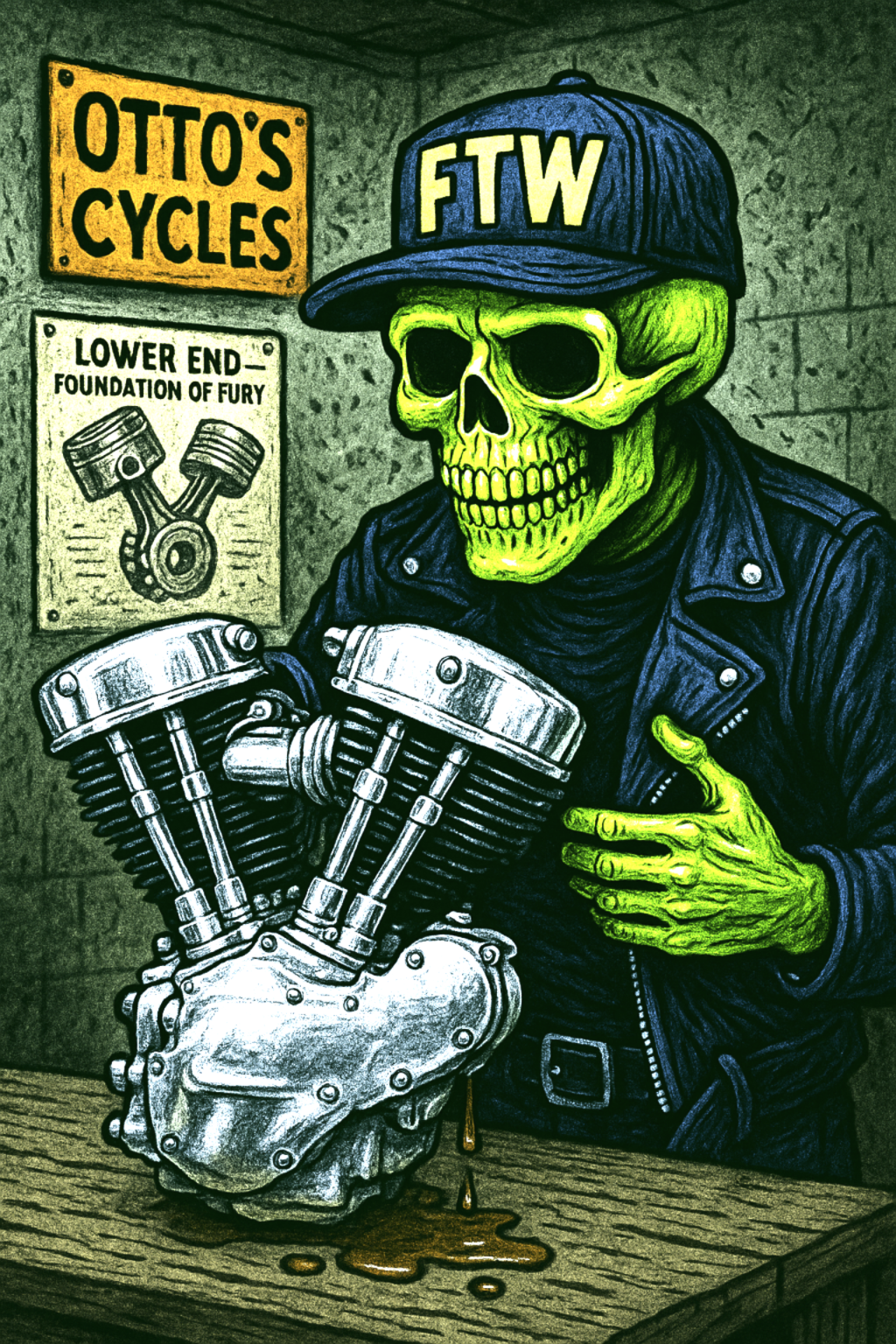
LOWER END THE FOUNDATION OF FURY
The crankcase is the spine and skeleton the foundation of everything. It holds the crankshaft, stores the oil, and anchors the entire powerplant. The left side houses the crankshaft cavity; the right side contains the gearcase, where motion turns into control. Every torque pulse, every explosion it all starts right here in this oily cathedral of chaos.
In Harley language, the crankshaft and flywheels are the same animal. Modern engines use a three piece setup, two flywheel halves connected by a single crankpin, with the connecting rods riding together on that shared pivot. Three sets of roller bearings keep it all alive at the bottom end, letting those rods hammer back and forth without melting themselves to oblivion. That rhythm that loping idle comes from this exact setup: two rods, one crankpin, a handshake of steel and timing.
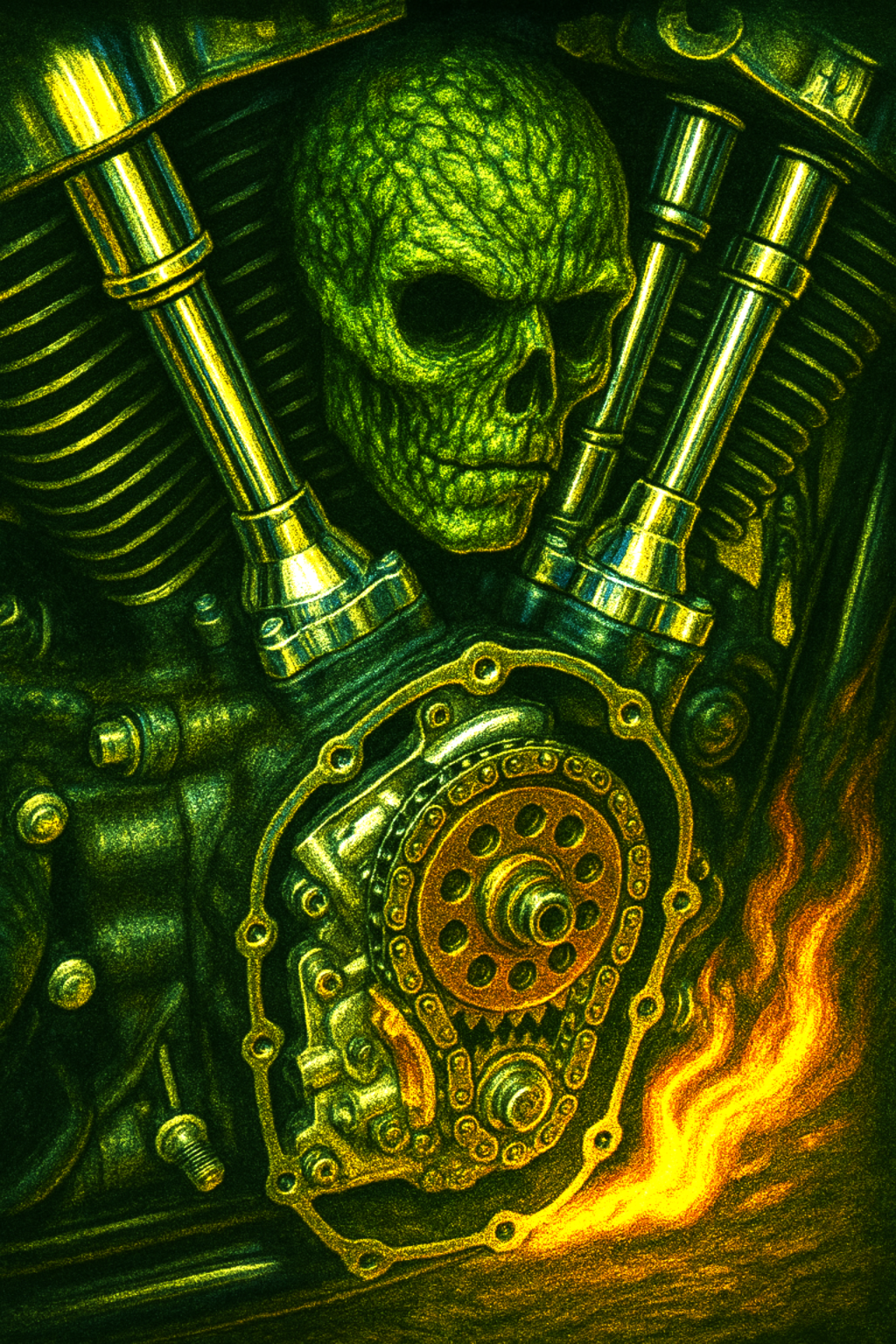
The gearcase is the command center; it keeps the whole symphony in sync. It houses the camshaft, the breather gear, and the oil return passages. Depending on the engine, Evos and Milwaukee Eights run a single cam, Twin Cams run two, and Sportsters well, they run four, because Sportsters never do anything quietly. The gearcase also scavenges oil from the flywheel chamber and feeds it back to the tank. It’s a maze of gears, timing marks, and angry little miracles.
TOP END THE POWER STAGE
Everything above the crankcase deck is the top end where explosions become movement and horsepower turns into happiness.
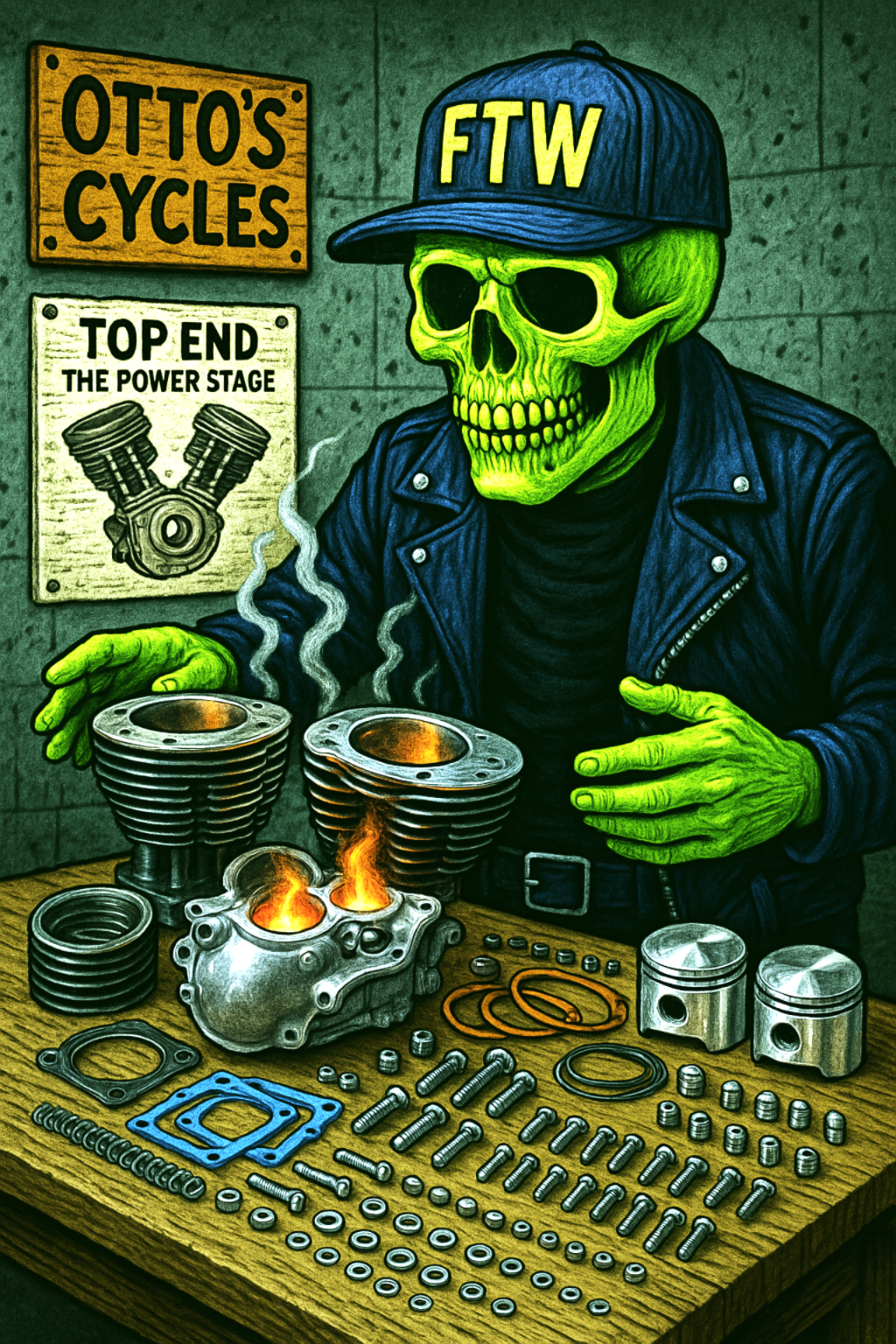
The V-Twin’s 45-degree cylinders are its signature stance, two barrels of fire aimed toward the horizon. Each one wears deep cooling fins to bleed off the heat that builds from combustion, and they’re locked to the crankcase with long studs for strength and alignment. Hot, loud, and unrelenting, the cylinders are where the noise begins.
Two pistons, one purpose: compress air, ignite fuel, and punch like a hammer on every stroke. Each piston runs three rings, two for compression, one for oil control. The compression rings keep the fire locked in the chamber, while the oil ring keeps the slick stuff where it belongs. If oil gets past, your plugs foul and your power dies. A clean seal equals clean power and a happy motor.
The cylinder heads are where combustion truly happens—the brain and crown of the engine. They form the top of the combustion chamber, housing the valves, springs, and rocker arms. All your horsepower is born inside that dome, fire trapped, compressed, and detonated. Above it all sit the rocker boxes, those polished housings that keep the valvetrain sealed and singing. Every flame inside those chambers is one heartbeat of a Harley.
VALVETRAIN THE ENGINE’S SOUL
This is where motion becomes timing—where gears translate chaos into choreography. The valvetrain controls the breathing of the beast: when to inhale, when to exhale, when to roar.
The camshaft is the composer—it decides when and how much each valve moves. Big Twins run one or two cams, and Sportsters run four, because again, nothing about a Sportster is quiet. Each lobe pushes a lifter, which drives a pushrod, which moves a rocker arm, opening a valve at the perfect millisecond. Gear driven from the crank, the cam’s rotation stays synced with piston movement so combustion hits with precision instead of chaos. Cam profiles, the shape of those lobes, define your engine’s personality. Smooth idle or savage pull? The cam decides.
The lifter rides the cam like a wave. It’s hydraulic, oil fed, and self adjusting. At the bottom, a roller rides the cam lobe; at the top, it pushes the pushrod. Hydraulic lifters are quiet, low maintenance, and precise. Solid lifters are old-school, loud, mean, and demanding. Either way, they’re the middlemen between your crank’s madness and your valve’s rhythm.
Then comes the grand finale – pushrods, rocker arms, valves, and springs. The cam lifts the lifter, the lifter raises the pushrod, the pushrod tips the rocker arm, and the rocker slams the valve open against the dual springs' pressure. When the cam lobe rolls away, those springs snap the valve shut, sealing the chamber for the next explosion. It’s violent, mechanical poetry – a ballet of brute force happening thousands of times per minute. Too much clearance, and you’ll rattle. Too little, and you’ll burn. But when it’s right – when it’s perfect – you’ll feel it in your spine.

⚡ TMC TAKEAWAY ⚡
Every Harley engine is a living system, a breathing, beating ecosystem of fire, oil, and motion. The Lower End anchors it, the Top End ignites it, and the Valvetrain makes it sing. Treat it like the machine god it is, keep it clean, lubed, and respected, and it’ll outlive us all.
By Thrash Metal Cycles
Oil is blood. Fire is breath. Torque is truth.
