SINGLE FIRE VS. DUAL FIRE: The Spark War Inside Every Harley Engine
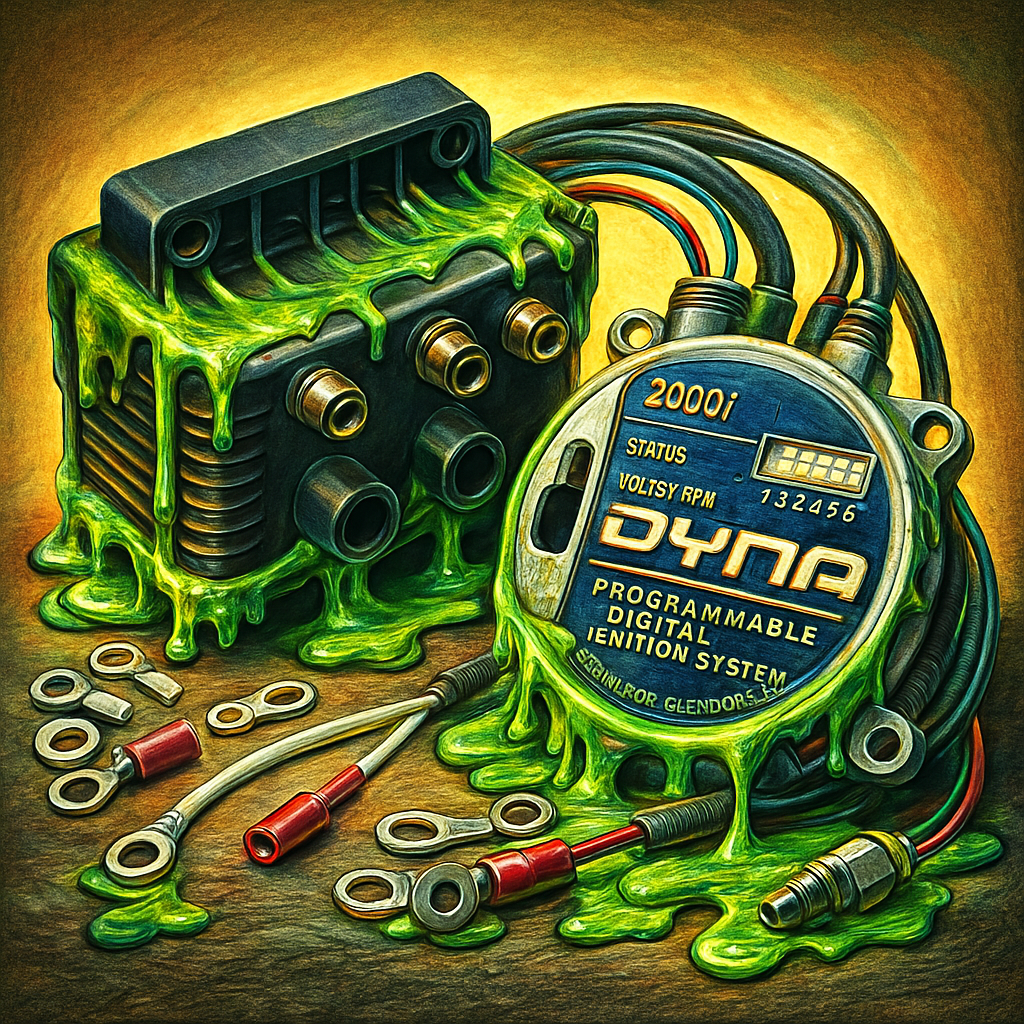
Every Harley rider eventually hits a moment usually at a stoplight, usually with the engine sounding like it’s trying to cough up its own soul where they wonder if their ignition is plotting against them.
And nine times out of ten, it kinda is.
This whole dual-fire vs. single-fire debate?
It’s not hype.
It’s not myth.
It’s not forum folklore told by a guy named “Panhead Pete” who hasn’t owned a running bike since Bush was president, either of them.
It’s real, it matters, and your engine will absolutely tell on you if you pick the wrong one.
So let’s break it down the TMC way straight talk, no fluff, and just enough humor so you don’t fall asleep on your tools.
Dual Fire: How Harley Saved Money (But Cost You Patience)
Harley didn’t invent dual fire for performance.
They invented it because it was cheap, simple, and wouldn’t die even if you treated it like a rental mower.
One coil.
One trigger.
Both plugs firing at the same time — whether their cylinders were in the mood for it or not.
It’s basically the ignition equivalent of yelling “FIRE!” into a crowded room and hoping the right person reacts. Sometimes it works beautifully. Sometimes somebody panics and throws a chair.
On even-firing engines, wasted spark is no big deal. But on a Harley? A Harley isn’t even firing. It’s character-firing.
315 degrees here, 405 degrees there, a whole lot of “this is fine” sprinkled on top.
Most of the time, the wasted spark just burns leftover fumes.
But every so often, it lights off a fresh mix during overlap and your carb sneezes at you so violently you start checking your eyebrows.
That’s the dual-fire lifestyle.
Cheap. Strong. Chaotic.
Like drinking bargain whiskey in a parking lot — technically fuel, but not the kind you brag about.
Single Fire: The Day the Engine Stops Arguing With Itself
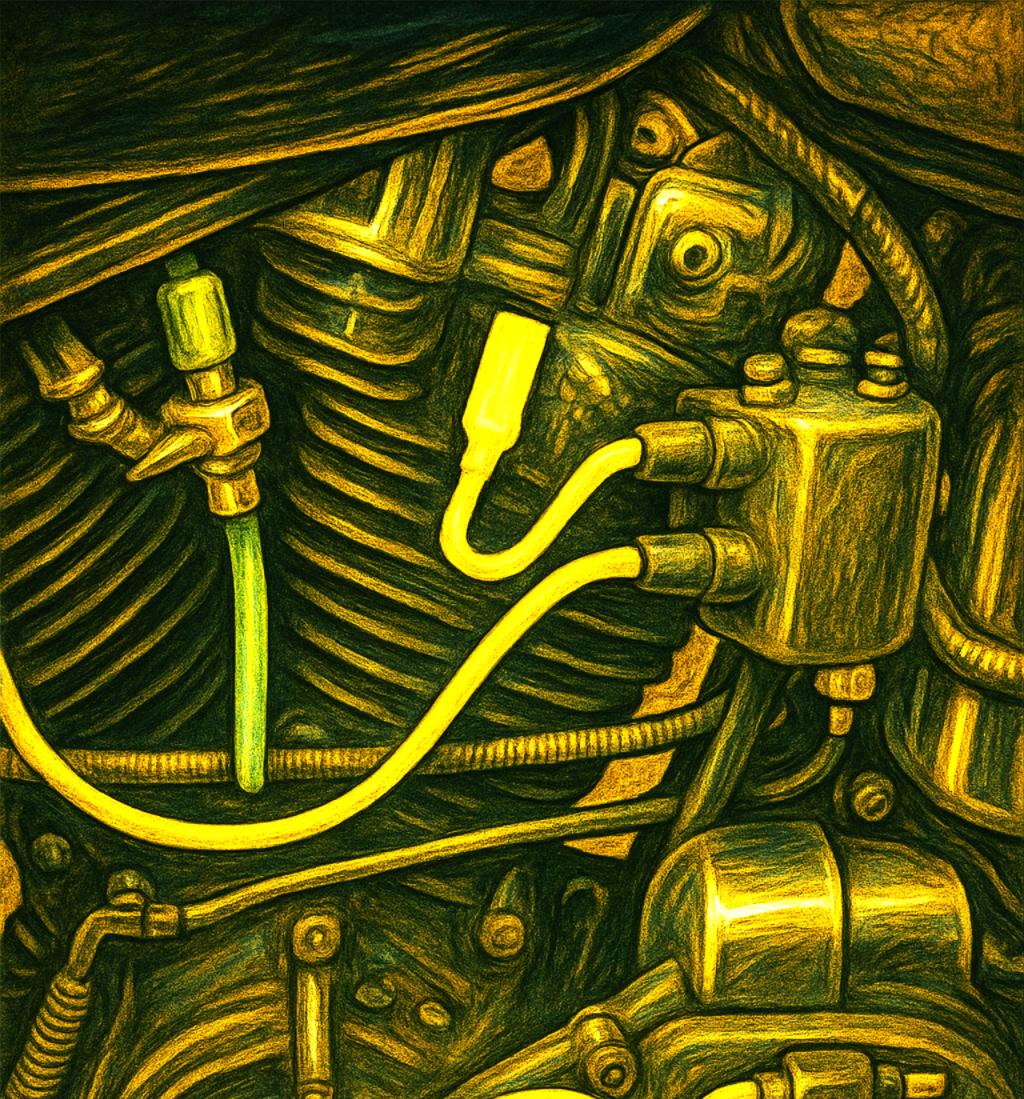
Single fire is what happens when someone at Harley finally says,
“Hey… what if the cylinders didn’t interrupt each other like siblings fighting over the remote?”
Two independent coil triggers.
Each plug fires only when its cylinder is on compression.
No interruptions. No mixed messages. No wasted sparks that ignite whatever’s randomly floating through the chamber.
The moment you switch, the difference is immediate.
The idle settles like the motor finally found inner peace.
Throttle response snaps like a fresh set of cables.
The whole bike stops sounding like it’s clearing its throat.
If dual fire is a drunk drummer,
single fire is a sober one who finally discovered the metronome.
Dual-Plug Heads: Two Sparks, One Mission
Dual-plug heads show up when you start building real engines big inch Evos, hot Shovels, strokers with more attitude than manners. When the combustion chamber gets big and domed, one spark struggles to light the whole party on time. So builders add a second plug to help the flame cross the room before detonation crashes the party.
But here’s the catch that makes mechanics groan:
Dual-plug heads + dual-fire ignition =
Four sparks per cycle.
Two useful. Two “what the hell are you doing?”
It’s the spark equivalent of having two DJs playing two different songs at the same party.
That’s why dual-plug heads come alive on a single-fire system. Now the sparks take turns like functioning adults, each one lighting its half of the mixture instead of lighting each other’s shoes on fire.
A dual-plug single-fire motor under throttle feels like the moment a band finally tunes their instruments. Everything syncs. Everything breathes. Everything hits.
And once you feel that smooth, steady roll — you don’t go back.
Single-Plug Heads: The Classic Harley Soul
Most Harleys are still running single-plug heads, and honestly?
They do just fine.
On stock or mildly built engines, one plug lights the mixture without breaking a sweat. The chamber’s smaller, the flame has a shorter commute, and the engine doesn’t need two sparks unless you start throwing compression and cam lift at it like confetti.
But even on a basic single-plug setup, the biggest performance gain isn’t adding another hole in the head.
It’s giving the existing spark a fighting chance.
A single-plug motor running a good single-fire ignition can feel sharper and cleaner than a dual-plug motor stuck on a sloppy dual-fire system. It’s not about quantity — it’s about quality. Give the spark the respect it deserves, and even a simple single-plug Evo will surprise you.
Coils: The Boring Part That Causes 90% of the Drama
Nobody walks around bragging about coil resistance unless they’ve been burned by it.
But here’s the truth: coils can make or break your setup faster than a bad cam choice.
Too much resistance, and you weaken the spark.
Too little, and you smoke the ignition like a cheap cigar. Use solid core wires and your ignition might go feral and start doing interpretive dance at idle.
Coils are the quiet backbone of your spark system.
Treat them like they matter.
Because they do.
The Modules We Actually Trust (and Why We Talk About Them)
There are a ton of ignition modules out there. Some good, some bad, some that look like they were soldered together during a power outage. But at TMC, we stick to three — Dyna, S&S HI-4/HI-4N, and Daytona Twin Tec — for one simple reason:
They’ve earned it.
We’ve run them.
We’ve tuned them.
We’ve tried to kill them.
And they keep coming back like loyal dogs and bad decisions.
Why These Three Make Sense (And Why We’d Recommend Them)
1. Dynatek 2000i
The street hero. The reliable workhorse. The one you put in when you want the bike to just RUN.
Why we'd recommend it:
Has single-fire AND dual-fire
Adjustable curves without needing a laptop
Proven on stock and lightly modified Evos
Survives heat, vibration, and questionable life choices
Easy to time, easy to troubleshoot
It’s the one you can put in, forget about, and trust.
TMC Verdict: If you want plug and play reliability, pick this.
2. S&S HI-4N
The tuner’s playground. The precision instrument.
Why we'd recommend it:
Best adjustability of the bunch
Let’s you control advance rates, curves, kick/e-start modes
LOVES big inch motors — stroker heaven
Fine tunes out detonation better than almost anything
Perfect for riders who want full control
This is the module you choose when you actually enjoy messing with timing curves on a Saturday night.
TMC Verdict: Best for hot Evos, strokers, Shovels, and tinkerhappy riders.
3. Daytona Twin Tec (TC88 / 1005, etc.)
The digital surgeon. Smart. Clean. Ultra precise.
Why we'd recommend it:
Computer adjustable curves (more precision than knobs)
Smoother idle and crisper midrange than most dial based ignitions
Excellent spark stability
Works beautifully on high performance builds
Incredible reliability record
This one is very “set it once, set it right, never look back.”
TMC Verdict: Best for riders who want modern accuracy without losing the soul of a carb’d Harley.
We talk about these three because they’ve proven themselves in our bikes, in our builds, and in our long nights at Otto’s bench trying to keep someone’s stroker from detonating through the frame.
If a module doesn’t impress us?
It doesn’t get mentioned.
The TMC Takeaway
Dual fire was good enough.
Single fire is better.
Dual plugs help big engines breathe.
Single plugs still rule the street.
Coils matter more than your buddy’s opinion.
And the right ignition module will make your bike run like it actually wants you to succeed.
If your Harley coughs through the carb, spits flames, idles like it’s chewing gravel, or feels like the cylinders aren’t even on speaking terms… don’t blame the carb right away.
Look at the spark.
Clean the spark.
Respect the spark.
Because in the church of Harley, wasted fire isn’t just a nuisance —
It’s a damn sin.
THRASH METAL CYCLES
