You Don’t Need More Power. You Need Better Rubber.
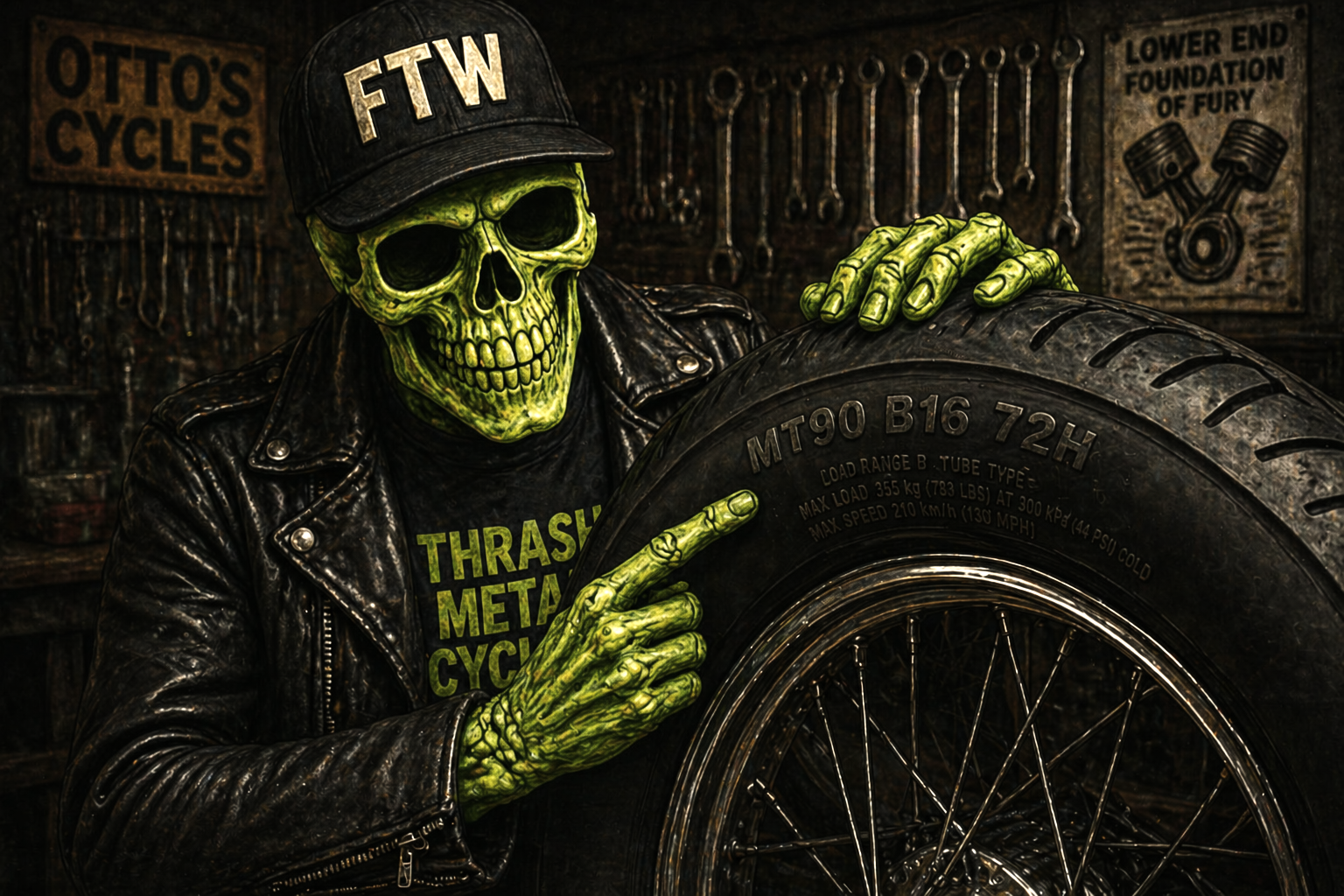
Most riders don’t notice their tires until something feels off.
The bike gets heavy in corners. Braking feels vague. The rear moves just enough to make you question it.
So they start chasing it. Suspension. Bars. Alignment. Geometry.
Most of the time, it’s tires.
They’re not loud. They don’t sell the bike. But they are the only thing touching the ground. Everything the bike does runs through that small patch of rubber.
And a lot of riders are running on worn-out confidence without realizing it.
The Contact Patch Conversation
This is where things get honest.
Every bit of power your bike makes, every brake input, every corner you lean into… it all comes down to a patch of rubber about the size of a credit card. That’s it. That small.
Weight, speed, torque, road surface, rider input… all of it gets translated through that one point of contact.
The contact patch is not fixed. It changes constantly based on pressure, load, speed, and lean angle.
Too much pressure and the patch shrinks.
Too little and it distorts, builds heat, and starts moving around.
Either way, you lose grip.
And the dangerous part is how gradual it is.
Tires don’t fail all at once. They go vague first. Then inconsistent. Then they slip.
By the time you notice it clearly, you’re already behind it.
Core Reality Most Riders Miss
Most guys blame suspension, bars, even frame geometry.
Nine times out of ten, it’s tires.
Cold grip. Wrong compound. Squared rear.
The bike feels dead because the contact patch is off.
And here’s the part nobody wants to admit.
You got used to it.
That slow turn-in became normal.
That vague front end became something you worked around.
That rear that never quite feels planted became “just how it rides.”
A squared rear doesn’t roll into a turn. It drops in.
A cupped front doesn’t track clean. It wanders.
A hardened tire doesn’t grip. It slides early and quietly.
That hesitation mid-corner isn’t in your head.
That’s shape. That’s compound. That’s time.
Everything comes back to the contact patch. If that part is wrong, the rest of the bike follows.
Tire Types Without the Noise
Forget marketing categories for a second. Think in terms of feel.
Cruiser tires are steady and predictable. They take a moment to lean, then hold a line. Built for miles, not feedback.
Touring tires add weight and stability. They handle load and distance without getting unsettled.
Old-school and vintage-style tires change the personality entirely. Taller sidewalls, narrower profiles, smoother roll into a lean. Less outright grip, more communication. You feel the road more, including its limits.
Performance cruiser tires sit in the middle. Some sharpen the bike and wake it up. Others just look aggressive without delivering much change.
Every tire is a trade.
Feel, lifespan, control.
You don’t get all three at max.
Matching Tire to Rider, Not Bike
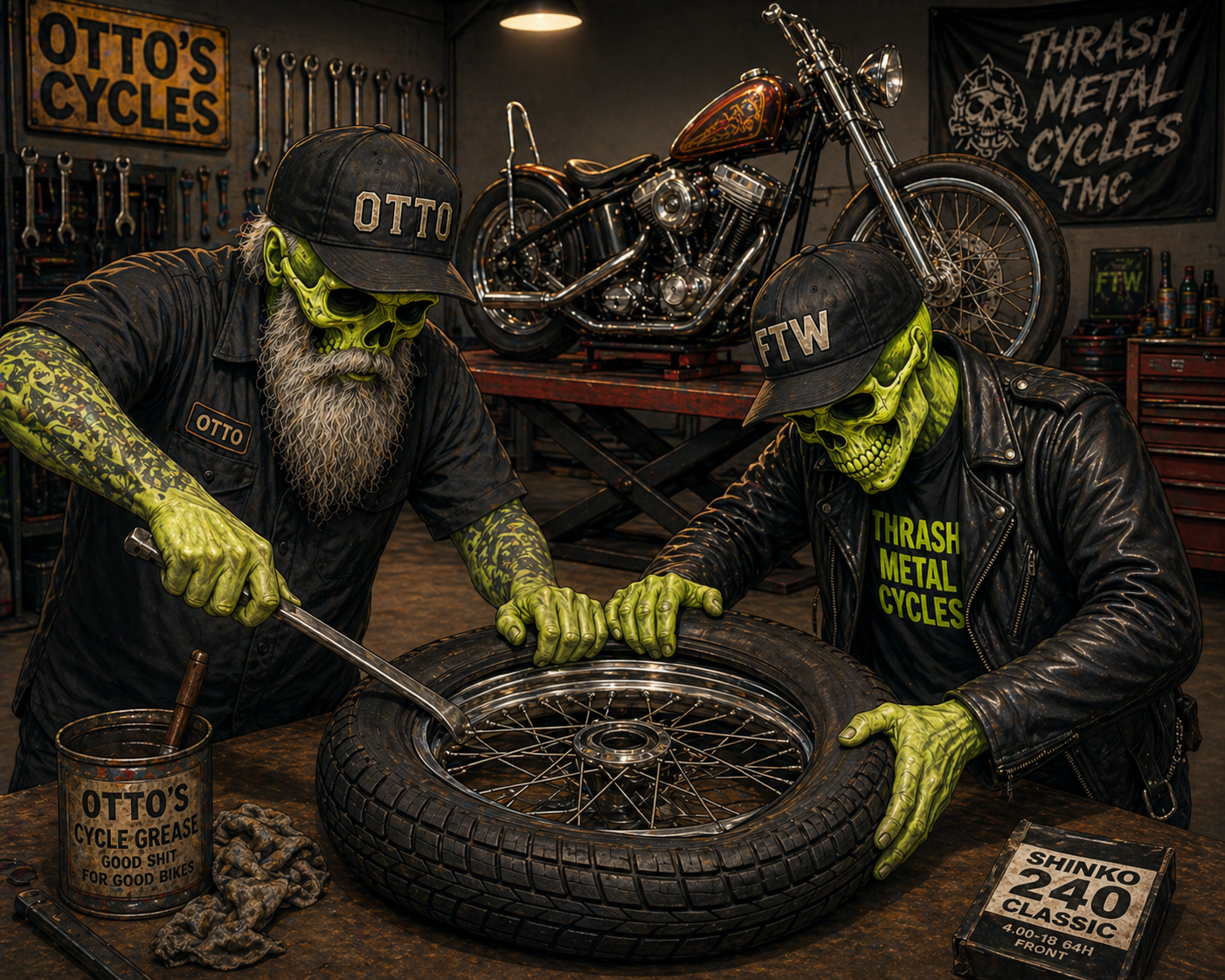
Same bike. Different rider. Completely different result.
Highway riders need stability and longevity. Something that tracks straight and doesn’t square off immediately.
Dunlop Harley-Davidson D402 Tires handle weight and miles without getting unstable.
Michelin Commander III Cruiser Tires smooth things out and last longer.
Shinko 777 Cruiser Tires work, but wear quicker under long straight runs.
Backroad riders want response and transition.
Metzeler Cruisetec Tires give better turn-in and edge feel.
Dunlop American Elite AE2 Tires sit in the middle with stability and some movement.
Chopper and old-school riders are chasing feel, not numbers.
Shinko 240 Classic Tires bring that vintage roll. Less grip, more honesty.
Commuters need consistency. Rain, cold, uneven pavement.
Commander III and American Elite hold steady across changing conditions.
Most riders think they’re one type.
Their mileage tells a different story.
Load and Speed Ratings
This is the part people ignore.
Every tire has a load index and a speed rating. That’s the operating limit.
Load rating is how much weight that tire can safely carry at proper pressure. Go under it, and the tire flexes too much, overheats, and wears fast.
Speed rating isn’t just about top speed. It’s about heat stability over time. Long highway runs build heat even if you’re not pushing hard.
Ignore those numbers, and the tire starts making decisions for you.
And it won’t tell you when it’s about to quit.
Bias vs Radial
This comes down to feel more than anything.
Bias-ply tires move as one piece. Sidewall and tread work together. They feel solid, planted, predictable. Slower to turn, but steady once they’re there.
Most traditional setups live here.
Shinko 777 Cruiser Tires
Dunlop Harley-Davidson D402 Tires
Shinko 240 Classic Tires
Radials separate the work. The tread grips, the sidewall flexes. They feel lighter, quicker, and handle heat better.
Michelin Commander III Cruiser Tires
Metzeler Cruisetec Tires
Neither is wrong.
Mixing them without understanding the difference is.
That’s where bikes start feeling “off” in ways you can’t explain.
Riding the Dark Side
“Dark siding” is the practice of running a car tire on the rear of a motorcycle. Usually on heavy touring bikes. Big baggers, Gold Wings, long-haul setups.
Why people do it is simple.
Mileage and cost.
A car tire can last significantly longer than a motorcycle tire. It has a flatter profile, more rubber on the road in a straight line, and it’s built to carry weight for long distances.
For riders doing serious highway miles, that starts to sound appealing.
That’s the argument for it.

Now here’s the reality.
Motorcycle tires are designed with a curved profile so the bike can lean naturally. The contact patch shifts as you lean, staying consistent through the turn.
Car tires are not built for that.
They’re flat.
When you lean a bike on a car tire, you’re riding up onto the edge of that flat profile. The contact patch doesn’t behave the same way. The transition into a lean feels different, and the stability mid-corner changes.
Translation… it doesn’t want to turn the way your bike was designed to turn.
You can make it work. Plenty of riders do. Especially straight-line highway guys who rarely push the bike into aggressive lean.
But it changes the feel.
And that’s the part that matters.
You’re trading predictable cornering behavior for longevity and load capacity.
For some riders, that trade makes sense.
For others, especially anyone who rides aggressively or values corner feel, it does not.
There’s also a safety and liability angle.
Motorcycle manufacturers and tire manufacturers do not approve this setup. If something goes wrong, you are outside of design intent.
That’s not opinion. That’s fact.
It’s one of those things where you need to be honest with yourself.
If your riding is 90% highway, steady throttle, minimal lean… you might never notice the downside.
If you like backroads, corners, pushing the bike even a little… you will.
The “Bike Feels Off” Checklist
Start here before you touch anything else.
First thing… check your pressure. Not what you think it is, not what it “should be.” Actually check it.
Then look at the front tire. Run your hand across it. If it feels uneven, kind of scalloped or choppy, that’s cupping.
Now check the rear. If it’s flat across the middle from too many highway miles, that’s your problem right there. It’s not rolling into turns anymore, it’s dropping in.
Take a step back and look at both tires together. Different brands, different styles, different wear patterns… that mismatch can throw the whole bike off.
And don’t ignore age. Rubber hardens over time, even if it looks fine. Old tires lie to you. They look good, but they don’t grip the way they should.
That’s most of it. Really.
Before you start chasing suspension. Before you start thinking bearings or tearing anything apart… just stop and look at what’s actually touching the ground.
That’s where the story usually starts..
What About the Tires We Didn’t Mention?
There are a lot of good tires out there.
More than we could ever fit into one article. And just because something isn’t listed here doesn’t mean it’s junk.
It just means it didn’t earn its place in this conversation.
You’ve got tires like the Metzeler ME888 Marathon Ultra Tires, Dunlop Harley-Davidson D401 Tires, and Shinko 230 Tour Master Tires.

People run them. People like them. They work.
No hate here. If they’re doing their job under you, keep riding.
But at TMC, we’re selective.
We’re not trying to list everything. We’re not trying to play catalog. We’re showing what we’ve seen perform, what fits the rider types we’re talking about, and what consistently delivers the feel we’re after.
Some tires lean too hard into mileage and lose feedback.
Some feel flat or vague when you start pushing the bike.
Some just don’t stand out enough to make the cut when better options are sitting right next to them.
That doesn’t make them bad.
It just means they didn’t earn a mention here.
Simple rule…
If you like what you’re riding on, and it’s not giving you problems, run it.
But if something feels off, or you’re looking to step the bike up a level… that’s where the tires we called out start to matter
Closing
You don’t need more power.
You need something that can actually use the power you already have.
Tires are the last link in the chain. Everything feeds into them. If they’re wrong, the bike will never feel right, no matter what you bolt on next.
Get them right, and everything sharpens. Braking settles. Corners smooth out. The bike stops fighting you and starts working with you.
That’s when it clicks.
Not louder. Not faster. Just connected.
And once you feel that… you don’t go back.
